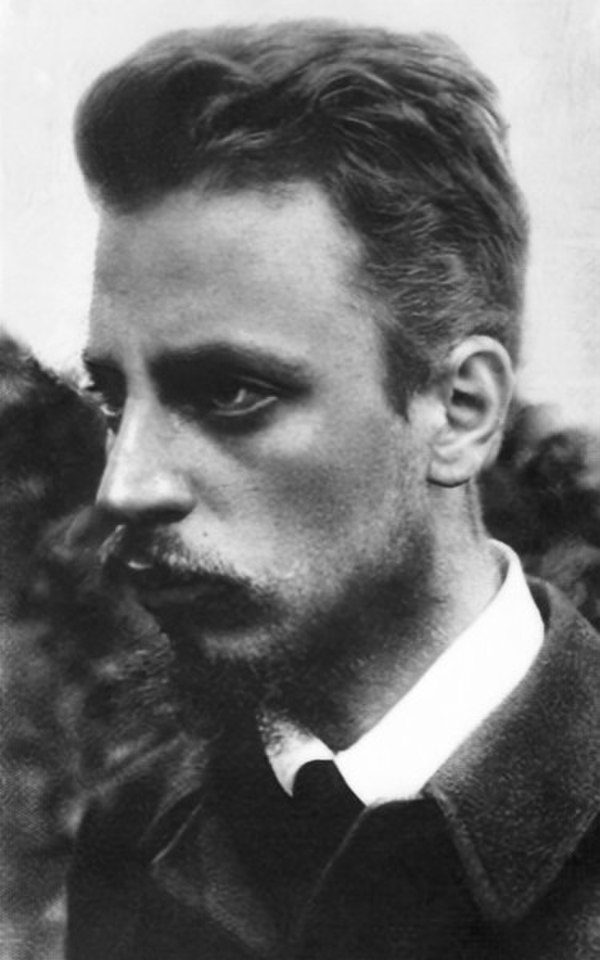
Unveiling the Inner Call: The Quest for Creative Impetus
Rainer Maria Rilke's exhortation to "search for the cause, find the impetus that bids you write" invites us to delve into the depths of our own motivations and inspirations. This call to introspection is not merely about the act of writing; it is a profound inquiry into the essence of our creative vocations. In a world often saturated with noise and distraction, understanding the underlying forces that drive our creative expression becomes essential. The stakes are high: to ignore this inner call is to risk a life lived in disconnection from our true selves.
Rilke's words resonate deeply within the context of artistic and spiritual pursuits, suggesting that the act of creation is not a solitary endeavor but a response to a deeper, often ineffable source. This search for cause is an invitation to engage with our inner landscape, to confront the fears and desires that shape our creative impulses. By acknowledging and exploring these motivations, we not only enrich our writing but also cultivate a more authentic relationship with our vocation, allowing it to flourish in ways that are both meaningful and transformative.
The image / the metaphor
At the heart of Rilke's quote lies a rich tapestry of imagery and action. The verbs "search" and "find" evoke a sense of journey and discovery, suggesting that the creative process is akin to a quest. This metaphorical journey is not one of mere surface exploration; it requires a deep dive into the self, an excavation of the layers that conceal our true motivations. The word "cause" implies a foundational element, a root from which our creative expression springs forth, while "impetus" suggests a force that propels us forward, urging us to articulate our innermost thoughts and feelings.
Delving deeper into this metaphor, we can see that Rilke is not merely advocating for the act of writing but is emphasizing the importance of understanding the 'why' behind it. The act of writing becomes a sacred dialogue between the self and the universe, where the writer must confront their own vulnerabilities and aspirations. This process of searching and finding is transformative; it invites us to align our creative endeavors with our authentic selves, allowing the act of writing to become a vessel for deeper truths and insights.
In the speaker's tradition
Rainer Maria Rilke's insights are deeply rooted in the tradition of mysticism, where the exploration of the self is often seen as a pathway to the divine. Concepts such as dharma, the inherent duty or calling that each individual must fulfill, resonate with Rilke's emphasis on finding one's creative impetus. In this context, the search for cause becomes a spiritual quest, one that aligns with the notion of kenosis—the self-emptying that allows for the divine to flow through us. This interplay between self and spirit is echoed in various mystical traditions, where the act of creation is viewed as a sacred expression of the divine will.
Rilke's reflections can be likened to the teachings found in the works of other mystics, such as the Sufi poet Rumi, who similarly emphasizes the importance of inner exploration and surrender to the creative process. In Rumi's poetry, the act of writing is often portrayed as a divine gift, a channel through which the soul expresses its deepest longings. Both Rilke and Rumi invite us to recognize that our creative endeavors are not merely personal pursuits but are deeply intertwined with the larger tapestry of existence, urging us to seek the divine within our own voices.
Living the teaching
Consider a modern scenario where Rilke's teaching finds resonance: a writer grappling with self-doubt and the fear of inadequacy. In this moment, the call to "search for the cause" becomes a lifeline, prompting the writer to reflect on their motivations. Perhaps they realize that their desire to write stems from a longing to connect with others, to share their experiences and insights in a way that fosters understanding and empathy. By acknowledging this impetus, the writer can move beyond their fears and embrace the creative process as a means of authentic expression, allowing their voice to emerge with clarity and purpose.
Alternatively, this teaching can be applied in the context of relationships. Imagine a person navigating a difficult conversation with a loved one, feeling the weight of unexpressed emotions. Rilke's invitation to find the cause can serve as a guiding principle, encouraging them to explore the underlying motivations for their feelings. By engaging in this introspective process, they may uncover a desire for deeper connection and understanding, allowing them to approach the conversation with honesty and vulnerability. In this way, the search for impetus not only enriches our creative endeavors but also enhances our relationships, fostering a greater sense of authenticity and connection.
A reflection
As we contemplate Rilke's profound words, we are invited to engage in a personal inquiry: What is the cause that drives my creative expression? In what ways can I deepen my understanding of the motivations behind my actions, both in writing and in my relationships? This reflective practice encourages us to cultivate a greater awareness of our inner landscape, allowing us to align our creative pursuits with our authentic selves. By embracing this journey of self-discovery, we can transform our creative endeavors into a meaningful exploration of the human experience, enriching both our lives and the lives of those around us.



Join the BrightStar Community
Stay connected with daily inspiration, event announcements, and community wisdom