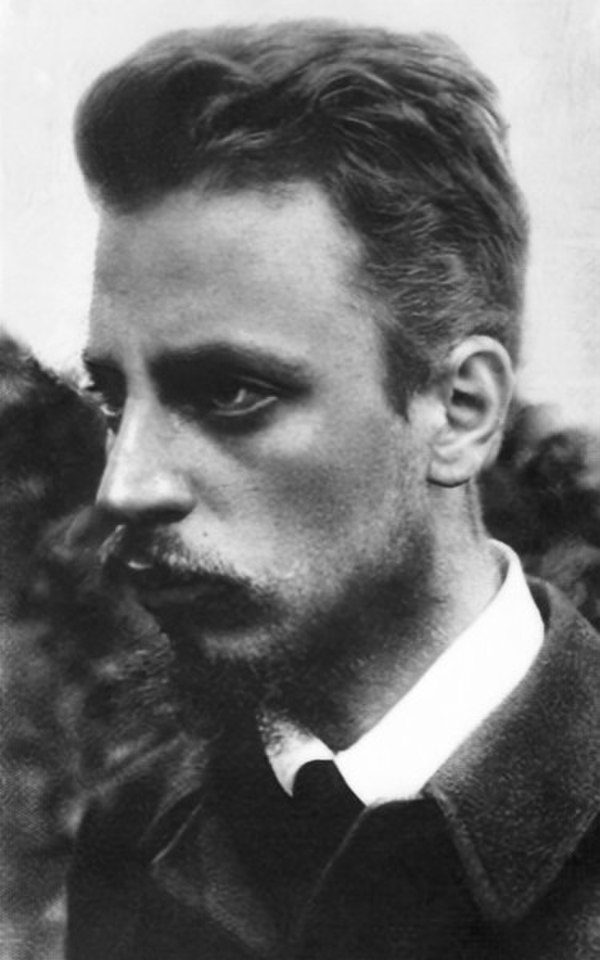
The Embrace of Emptiness: Rilke's Call to Being
Rainer Maria Rilke invites us into a profound contemplation with his evocative phrase, "Be — and yet know the great void where all things begin." This duality of existence and emptiness speaks to the heart of our human experience, urging us to embrace both our being and the vast, unformed potential that lies beyond it. In a world often defined by noise and distraction, Rilke's words remind us of the importance of recognizing the stillness from which all creation emerges, a stillness that can ground us in our most authentic selves.
To "be" is to exist fully in the present moment, to engage with life in its myriad forms. Yet, Rilke's invitation extends beyond mere existence; it beckons us to acknowledge the "great void," a space of infinite possibility and profound emptiness. This paradox challenges us to find balance between our tangible experiences and the intangible essence that underlies them. In doing so, we can cultivate a deeper understanding of our place in the universe and the interconnectedness of all things.
The image / the metaphor
At first glance, Rilke's quote presents a striking juxtaposition between the act of being and the concept of the void. The verb "be" is an active call to presence, urging us to engage with our lives, our emotions, and our surroundings. In contrast, the "great void" evokes a sense of emptiness, a vast expanse where potential resides. This imagery captures the essence of existence as a dance between fullness and emptiness, where each moment of being is enriched by the awareness of what lies beyond it.
Diving deeper into the metaphor, we can see that the "great void" is not merely a negative space but a fertile ground for creativity and transformation. It is within this emptiness that all things find their origin, a reminder that before creation, there is a state of pure potential. Rilke's words encourage us to embrace this paradox, recognizing that our existence is not separate from the void but intricately woven into its fabric. This understanding can lead us to a more profound appreciation of both our individuality and our connection to the cosmos.
In the speaker's tradition
Rainer Maria Rilke's exploration of being and emptiness resonates deeply within the tradition of mysticism, where the interplay of existence and non-existence is a central theme. Concepts such as "sunyata" in Buddhism, which refers to the emptiness that is the essence of all phenomena, echo Rilke's insights. Similarly, the notion of "kenosis" in Christian mysticism, which speaks to the self-emptying of one's will to allow for divine presence, aligns with the idea of recognizing the void as a source of transformation and renewal.
In his work "Letters to a Young Poet," Rilke emphasizes the importance of solitude and introspection, suggesting that true understanding arises from a deep engagement with the self and the silence that surrounds it. This echoes the teachings found in the Upanishads, where the exploration of the self leads to the realization of the ultimate reality, or Brahman, which is both the source and the essence of all existence. Rilke's invitation to "know the great void" can thus be seen as a call to delve into this inner silence, where the boundaries of self dissolve and the interconnectedness of all life becomes apparent.
Living the teaching
Consider a modern scenario where the teaching of Rilke's quote can be applied: a busy professional navigating the demands of work and personal life. In the midst of deadlines and responsibilities, one might feel overwhelmed, losing sight of the deeper purpose behind their actions. By taking a moment to pause and reflect on the "great void," this individual can reconnect with their core values and intentions, allowing for a more mindful approach to their daily tasks. This practice of grounding oneself in the present while acknowledging the vast potential of the void can lead to greater clarity and fulfillment.
In relationships, Rilke's teaching can also provide a transformative lens. Imagine a couple facing conflict, where emotions run high and misunderstandings abound. By embracing the concept of emptiness, they can create space for vulnerability and openness, recognizing that their individual experiences are part of a larger tapestry of connection. This awareness allows them to navigate their differences with compassion, fostering a deeper understanding of one another and the shared journey they are on. In both personal and relational contexts, the balance of being and knowing the void can lead to profound growth and healing.
A reflection
As we contemplate Rilke's invitation to "be — and yet know the great void where all things begin," we are called to reflect on our own relationship with existence and emptiness. How can we cultivate a deeper awareness of the stillness that underlies our busy lives? In what ways might embracing the void enrich our understanding of ourselves and our connections with others? Allow these questions to linger in your heart as you explore the delicate balance between being and the infinite potential that lies within the emptiness.

Join the BrightStar Community
Stay connected with daily inspiration, event announcements, and community wisdom