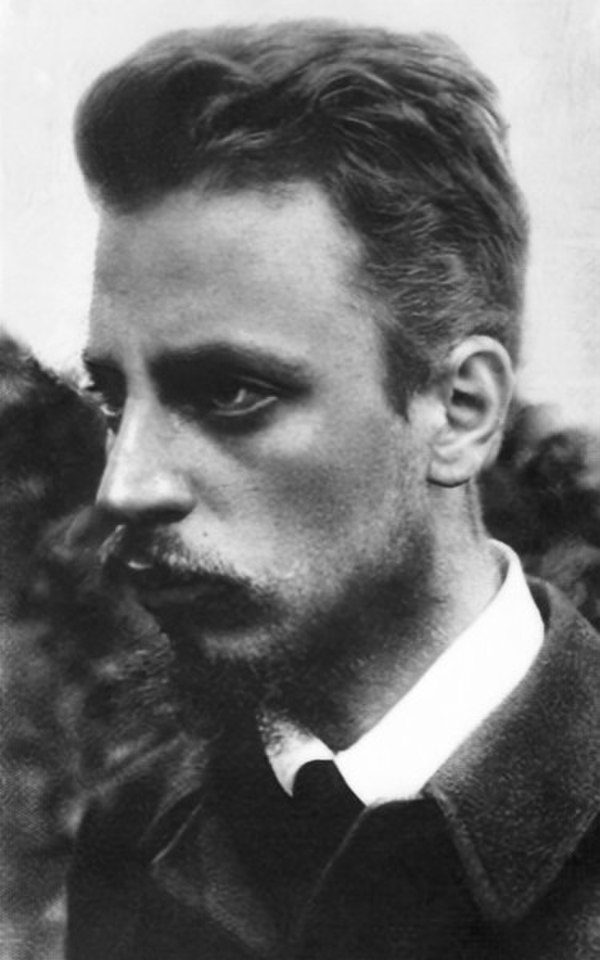
The Paradox of Being and Non-Being
Rainer Maria Rilke's profound assertion, "Be — and at the same time know the implication of non-being," invites us to explore the delicate balance between existence and the void that underlies it. In a world often dominated by the pursuit of tangible achievements and identities, this quote challenges us to embrace a deeper understanding of our essence. It beckons us to recognize that true existence is not merely about being present in the world but also about acknowledging the emptiness that gives rise to our being. This awareness can lead to a more profound sense of peace and acceptance in our lives.
Rilke's words resonate with the complexities of human experience, where the interplay of being and non-being forms the crux of our spiritual journey. The invitation to "be" suggests an active engagement with life, while the acknowledgment of "non-being" points to a contemplative awareness of the impermanence and transience of all things. This duality is not merely a philosophical abstraction; it is a lived reality that shapes our relationships, aspirations, and ultimately, our understanding of self. By embracing both aspects, we can cultivate a richer, more nuanced experience of existence.
The image / the metaphor
At first glance, Rilke's quote presents a striking juxtaposition of two seemingly opposing states: being and non-being. The verb "be" evokes a sense of presence, vitality, and engagement with the world, while "non-being" introduces a notion of absence, emptiness, and perhaps even liberation from the constraints of identity. This interplay creates a vivid imagery of existence as a dance between fullness and void, where each state informs and enriches the other. The felt sense of this paradox invites us to explore the depths of our own existence, urging us to recognize that our lives are not solely defined by what we possess or achieve.
Diving deeper into the metaphor, we can see that Rilke's invitation to "know the implication of non-being" suggests a profound wisdom that transcends mere intellectual understanding. It calls for an experiential engagement with the emptiness that underlies our being, prompting us to confront our fears, insecurities, and attachments. This exploration of non-being can lead to a transformative realization: that within the void lies the potential for renewal and growth. By embracing this paradox, we can cultivate a sense of freedom that allows us to navigate the complexities of life with grace and authenticity.
In the speaker's tradition
Rainer Maria Rilke's insights are deeply rooted in the mystical traditions that emphasize the interplay of being and non-being. Concepts such as "kenosis," the Christian notion of self-emptying, echo Rilke's call to embrace the void as a pathway to deeper understanding. Similarly, the Buddhist concept of "sunyata," or emptiness, invites practitioners to recognize that all phenomena are interdependent and transient, thus revealing the illusory nature of the self. These traditions converge in their recognition that true wisdom arises from the acceptance of both existence and non-existence, urging us to transcend the dualities that often confine our understanding.
In Rilke's own work, particularly in "Sonnets to Orpheus," we find a rich tapestry of themes that explore the relationship between life and death, creation and dissolution. The sonnets reflect a deep engagement with the cycles of existence, where the acknowledgment of non-being serves as a catalyst for artistic and spiritual expression. Rilke's poetic exploration resonates with the teachings of mystics across cultures, who have long recognized that the journey toward enlightenment involves a profound acceptance of the void that underlies all creation.
Living the teaching
Consider a modern scenario where Rilke's teaching might resonate: a person grappling with the loss of a loved one. In the midst of grief, the individual may feel a profound sense of non-being, as if a vital part of their existence has been stripped away. Yet, within this emptiness lies an opportunity for transformation. By embracing the reality of their loss and allowing themselves to fully experience the pain, they may discover a deeper connection to their own being and the shared human experience of love and loss. This journey through grief can ultimately lead to a richer appreciation of life and a renewed sense of purpose.
In another context, consider the dynamics of a challenging relationship. When faced with conflict, one might feel the urge to assert their identity and defend their position. However, Rilke's invitation to know the implications of non-being can serve as a guiding principle. By stepping back and recognizing the impermanence of the situation, both parties may find the space to listen and empathize, allowing for a deeper connection to emerge. This practice of embracing non-being can foster compassion and understanding, transforming conflict into an opportunity for growth and healing.
A reflection
As we contemplate Rilke's profound words, we are invited to reflect on the nature of our own existence. How do we navigate the delicate balance between being and non-being in our lives? In moments of stillness, consider the ways in which the acknowledgment of emptiness can enrich your understanding of self and your relationships with others. What insights arise when you embrace the paradox of existence, allowing both being and non-being to coexist within your experience?

Join the BrightStar Community
Stay connected with daily inspiration, event announcements, and community wisdom