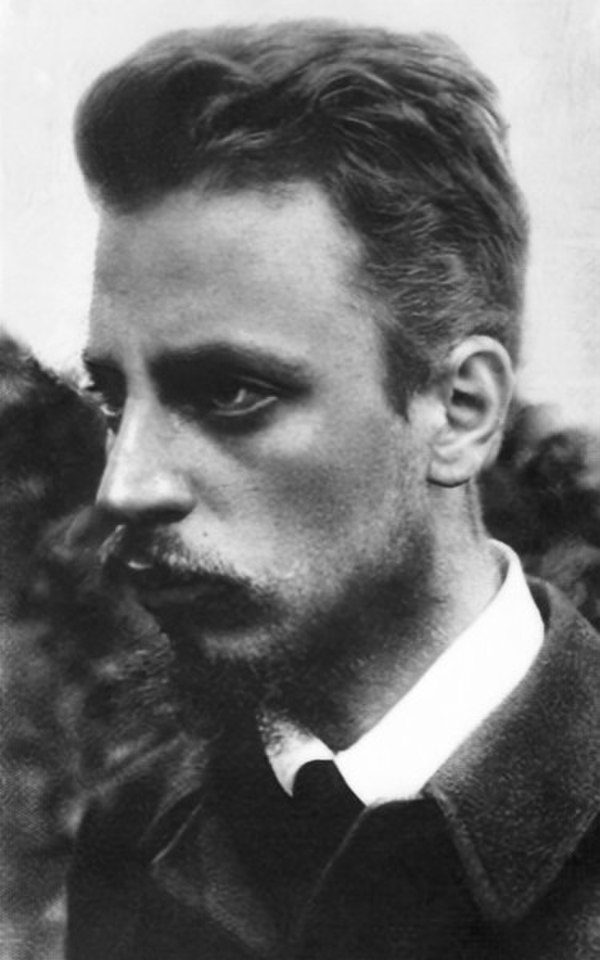
The Necessity of Creation: Rilke's Insight into Authentic Art
Rainer Maria Rilke's assertion that "A work of art is good if it has arisen out of necessity" invites us to explore the profound relationship between creativity and authenticity. In this statement, Rilke emphasizes that true artistic expression emerges not merely from the desire to create but from an inner compulsion, a deep-seated need that compels the artist to manifest their vision. This perspective challenges the often superficial motivations behind artistic endeavors, urging us to consider the deeper emotional and spiritual currents that drive our creative impulses.
By framing art as a necessity rather than a choice, Rilke elevates the act of creation to a sacred endeavor. This notion resonates with anyone who has ever felt the urge to create, whether through writing, painting, music, or any other form of expression. It suggests that the most impactful works are those that resonate with the artist's authentic self, reflecting their innermost truths and experiences. In a world saturated with art that may be produced for commercial gain or social approval, Rilke's insight serves as a reminder of the importance of connecting with our genuine motivations.
The image / the metaphor
At its core, Rilke's quote conjures an image of art as a living entity, born from the depths of necessity. The word "arisen" suggests a natural emergence, as if the artwork is a flower breaking through the soil, driven by an innate force. This imagery evokes a sense of urgency and authenticity, as if the artist is compelled to give voice to their inner world. The use of "necessity" implies that the creation is not merely a product of whim or fancy but rather a vital expression of the artist's being, an essential part of their existence.
Diving deeper into the metaphor, we can see that necessity in this context transcends mere survival; it speaks to a spiritual imperative. Just as a river must flow, so too must the artist's expression find its way into the world. This necessity can be likened to the concept of "kenosis" in Christian mysticism, which refers to the self-emptying of one's own will to make way for divine influence. In this light, Rilke's words suggest that true art is not only a personal expression but also a channel through which something greater can manifest.
In the speaker's tradition
Rainer Maria Rilke's insights are deeply rooted in the mystical traditions that emphasize the importance of inner experience and authenticity. His work often reflects the principles of "fana," or self-annihilation, found in Sufi mysticism, where the individual ego must dissolve to allow for a greater truth to emerge. This aligns with Rilke's notion that the artist must tap into a deeper necessity, transcending personal desires to connect with universal themes and truths. In this way, the act of creation becomes a spiritual practice, a means of aligning oneself with the cosmos.
Furthermore, Rilke's emphasis on necessity resonates with the Buddhist concept of "sunyata," or emptiness, which encourages individuals to let go of attachments and preconceived notions. Just as a painter must empty their mind of distractions to capture the essence of their subject, so too must the artist embrace the necessity of their creative impulse. In his "Letters to a Young Poet," Rilke encourages the young artist to trust their inner voice, suggesting that this trust is the key to producing work that is not only good but also deeply meaningful.
Living the teaching
Consider a modern scenario where Rilke's teaching on necessity can be applied: a writer grappling with the decision to pursue a novel. Faced with the pressures of the publishing industry and the desire for commercial success, the writer may feel torn between creating what is expected and what is genuinely needed. By reflecting on Rilke's words, the writer can reconnect with their authentic voice, recognizing that the most compelling stories often arise from personal necessity—experiences, emotions, and truths that demand to be expressed. This realization can empower the writer to craft a narrative that resonates not only with themselves but also with readers who seek authenticity.
In another context, consider a relationship that has become strained. One partner may feel a deep necessity to communicate their feelings, yet fear the potential fallout. Rilke's insight encourages them to embrace this necessity as a vital part of their emotional truth. By expressing their feelings honestly and authentically, they not only honor their own needs but also create an opportunity for deeper connection and understanding within the relationship. In this way, necessity becomes a bridge, fostering intimacy and healing through genuine expression.
A reflection
As we contemplate Rilke's assertion that a work of art is good if it arises from necessity, we are invited to reflect on our own creative impulses and motivations. What drives us to create, to express, or to connect? Are we responding to an inner call, or are we influenced by external expectations? In this moment of reflection, consider this question: What necessity within you longs to be expressed, and how can you honor that call in your life?


Join the BrightStar Community
Stay connected with daily inspiration, event announcements, and community wisdom