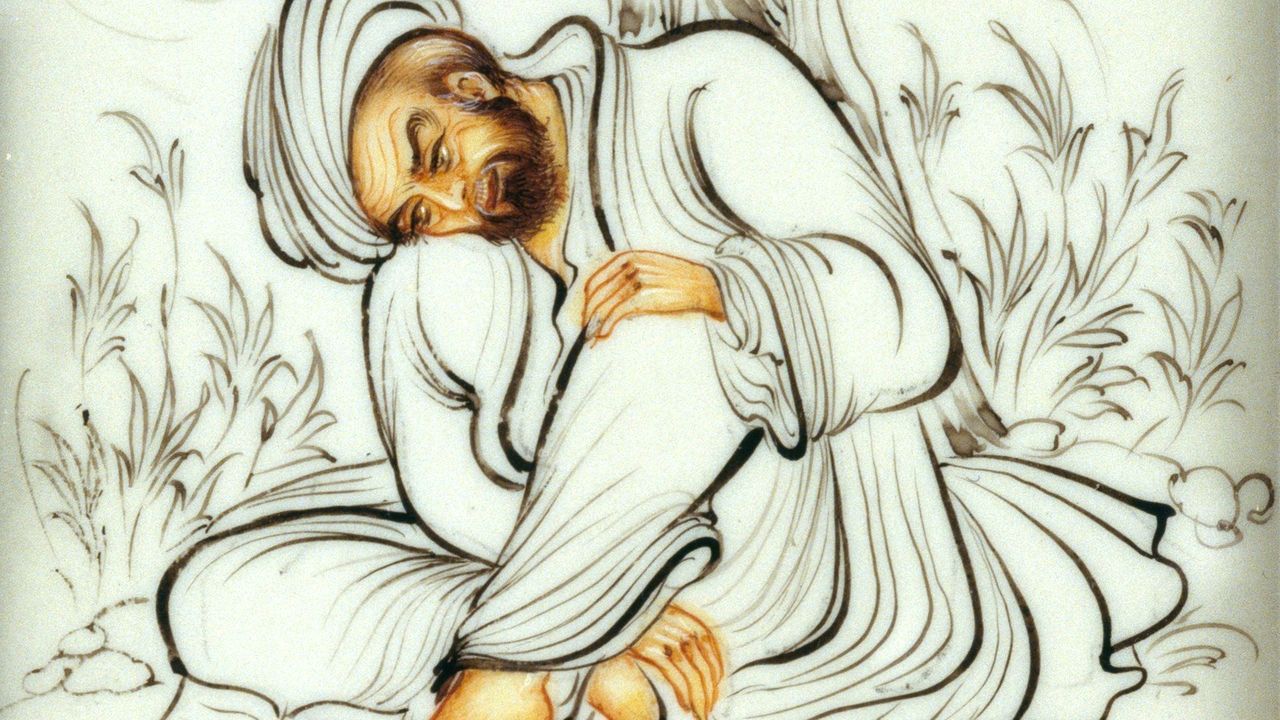
Unity in the Heart's Garden
Hafiz's evocative line, "In the rose-garden of the heart, the cypress and the nightingale are one," invites us to explore the profound interconnectedness of beauty and love within our innermost selves. This imagery suggests that within the sacred space of the heart, disparate elements—symbolized by the cypress and the nightingale—can coexist harmoniously. The stakes of this realization are high; it challenges us to transcend the superficial divisions we often impose on our experiences and relationships, urging us to recognize the unity that underlies all existence.
Delving deeper, we find that Hafiz's words resonate with the essence of Sufi thought, where the heart is not merely an organ but a spiritual center that perceives the world through the lens of divine love. The rose-garden serves as a metaphor for the heart's capacity to cultivate beauty, while the cypress and nightingale represent the duality of existence—strength and grace, silence and song. This unity is not just an abstract concept; it is a lived experience that invites us to embrace the fullness of our being and the world around us.
The image / the metaphor
The imagery of a rose-garden conjures a vivid landscape, rich with color, fragrance, and life. The rose, often associated with love and beauty, stands in contrast to the tall, steadfast cypress, which symbolizes strength and endurance. The nightingale, with its melodious song, adds a layer of emotional depth, suggesting that the heart is a place where beauty and strength can coexist. The choice of the word "are" in the quote emphasizes a profound unity; it implies that these elements are not merely adjacent but are interwoven, each enhancing the essence of the other.
As we explore the metaphor further, we recognize that the heart's garden is a sanctuary where the complexities of life can be embraced. The cypress and the nightingale represent the dual aspects of our existence—our groundedness in the material world and our yearning for transcendence. This duality is essential for a holistic understanding of love and beauty; it teaches us that true harmony arises when we accept and integrate all parts of ourselves, rather than striving to separate or elevate one aspect over another.
In the speaker's tradition
Hafiz, a luminary of Sufi poetry, invites us into a tradition that emphasizes the unity of all creation. Central to Sufi thought is the concept of *fana*, or the annihilation of the self in the divine presence, which echoes the idea of oneness expressed in Hafiz's quote. This notion encourages us to dissolve the boundaries that separate us from others and from the divine, allowing us to experience the interconnectedness of all beings. In this light, the cypress and the nightingale become symbols of the various paths we traverse in our spiritual journey, each leading us toward a deeper understanding of love and unity.
In the *Divan*, Hafiz often employs rich imagery to convey profound spiritual truths. For instance, he writes about the intoxication of divine love, which can lead to a state of *shahada*, or witnessing, where the lover and the beloved become indistinguishable. This aligns beautifully with the essence of the quote, as it suggests that in the heart's garden, the distinctions we create in our minds dissolve, revealing a deeper truth about our shared existence.
Living the teaching
Consider a modern scenario where this teaching might resonate: imagine a community grappling with division and misunderstanding. In such a context, Hafiz's words remind us that beneath the surface differences—be they cultural, ideological, or personal—lies a shared humanity. By cultivating a heart-centered approach, individuals can begin to see the cypress and the nightingale within each other, fostering empathy and connection. This perspective encourages dialogue and understanding, transforming conflict into a garden of possibilities.
In a more personal context, think about a challenging relationship—perhaps with a family member or a friend. The quote invites us to look beyond the apparent discord and recognize the underlying beauty and strength that each person brings to the relationship. By embracing the unity of the cypress and the nightingale, we can approach our interactions with compassion, seeking to understand rather than judge. This practice not only enriches our relationships but also deepens our own experience of love and connection.
A reflection
As we contemplate Hafiz's profound insight, we are left with a contemplative question: How can I cultivate the rose-garden of my heart to embrace both the cypress and the nightingale within myself and others? This inquiry invites us to explore the ways in which we can nurture unity in our lives, recognizing that beauty and strength coexist in every moment, waiting to be discovered and celebrated.