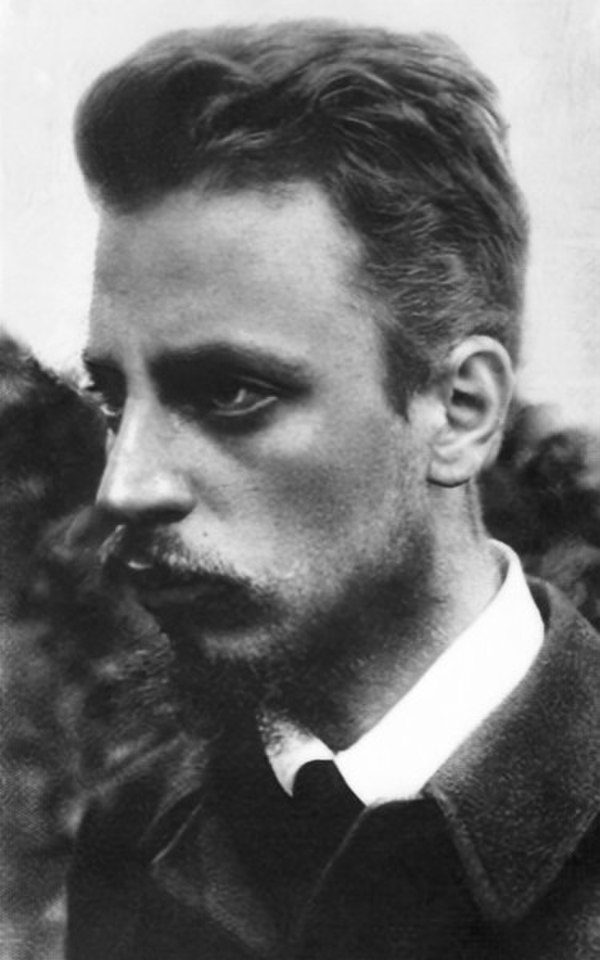
Journey Within: The Call to Authenticity
Rainer Maria Rilke's assertion that "Nobody can advise and help you, nobody. There is only one way: go into yourself," serves as a profound reminder of the necessity of introspection in our quest for authenticity. In a world saturated with external influences and opinions, Rilke's words challenge us to turn inward, suggesting that true guidance and understanding can only be found within. This notion resonates deeply in our contemporary lives, where the cacophony of voices often drowns out our inner wisdom.
Rilke's invitation to delve into the self is not merely a call for solitude but a profound exploration of one's inner landscape. It emphasizes the importance of self-discovery and the courage required to confront our own thoughts, fears, and desires. In a society that often prioritizes external validation, Rilke's wisdom urges us to embrace the aloneness that accompanies this journey, recognizing it as a vital component of personal growth and spiritual awakening.
The image / the metaphor
At the heart of Rilke's quote lies a powerful metaphorical landscape. The phrase "go into yourself" evokes an image of a deep, uncharted territory, rich with potential yet fraught with uncertainty. The verbs "advise" and "help" suggest a reliance on others that Rilke ultimately deems insufficient. Instead, he emphasizes the necessity of personal exploration, where the journey inward becomes a solitary pilgrimage toward understanding and authenticity.
This metaphor extends beyond mere self-reflection; it speaks to the transformative power of solitude. To "go into yourself" implies a willingness to confront the shadows and complexities that reside within. It is an invitation to navigate the labyrinth of one's own psyche, where the treasures of insight and clarity await those brave enough to embark on this inward journey. Rilke's words remind us that the path to self-discovery is often solitary, yet it is in this solitude that we may uncover our truest selves.
In the speaker's tradition
Rainer Maria Rilke's perspective is deeply rooted in the tradition of mysticism, where the quest for inner truth is paramount. This aligns with concepts such as dharma in Eastern philosophies, which emphasizes the importance of one's personal path and duty toward self-realization. Similarly, the notion of kenosis, or self-emptying, found in Christian mysticism, echoes Rilke's call to relinquish external dependencies in favor of an authentic inner life. Both traditions highlight the necessity of turning inward to discover one's true essence.
In Rilke's own writings, particularly in "Letters to a Young Poet," he underscores the importance of solitude and introspection as essential components of the creative process. He encourages the young poet to embrace their inner voice, suggesting that true artistry emerges from a deep connection with oneself. This echoes the teachings of various mystics who advocate for the transformative power of self-exploration, reinforcing the idea that the journey inward is not only a personal endeavor but a universal one.
Living the teaching
Consider a modern scenario where Rilke's teaching resonates profoundly: an individual grappling with career choices amidst societal expectations. In this context, the pressure to conform to external standards can be overwhelming, leading to confusion and dissatisfaction. By heeding Rilke's advice to "go into yourself," this person might take time away from the noise of advice and opinions, engaging in reflective practices such as journaling or meditation. This inward exploration allows them to clarify their values and aspirations, ultimately guiding them toward a more authentic path.
In relationships, Rilke's wisdom can also illuminate the complexities of connection. Imagine a couple facing challenges in communication; each partner may seek external advice or validation from friends. However, by embracing the solitude of introspection, they can better understand their own feelings and motivations. This self-awareness fosters deeper empathy and connection, allowing them to navigate their relationship with greater authenticity and understanding. Rilke's call to turn inward thus becomes a powerful tool for enhancing both personal and relational growth.
A reflection
As we contemplate Rilke's profound statement, we are invited to ask ourselves: What truths lie hidden within me that I have yet to uncover? This question encourages a deep dive into our own experiences, fears, and desires, prompting us to embrace the solitude that often accompanies self-discovery. In a world that frequently seeks to define us through external lenses, Rilke's words remind us that the most significant journey we can undertake is the one that leads us back to ourselves.


Join the BrightStar Community
Stay connected with daily inspiration, event announcements, and community wisdom