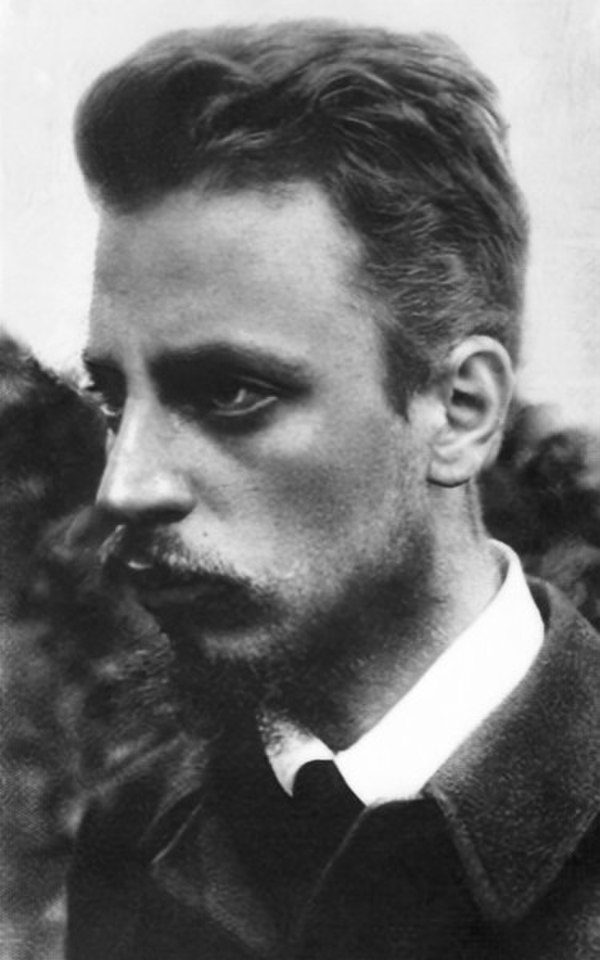
The Dance of Souls: Rilke's Inquiry into Love and Separation
In the poignant words of Rainer Maria Rilke, we encounter a profound question about the nature of intimacy and the soul's relationship with another. He asks, "How shall I hold my soul that it may not be touching yours? How shall I lift it then beyond you to other things?" This inquiry invites us to explore the delicate balance between love and individuality, urging us to consider how we can connect deeply with others while still honoring our own spiritual journey. The stakes are high, as this tension between closeness and autonomy shapes our relationships and our understanding of self.
Rilke's words resonate with the complexities of human connection, where the intertwining of souls can lead to both ecstasy and entrapment. The question of how to maintain one's own essence while engaging with another's spirit is not merely rhetorical; it is a call to cultivate a love that is expansive rather than possessive. In a world that often equates intimacy with merging identities, Rilke's inquiry serves as a reminder of the sacredness of both connection and individuality, inviting us to reflect on how we navigate our relationships with depth and awareness.
The image / the metaphor
At the heart of Rilke's quote lies a rich tapestry of imagery and metaphor. The act of "holding" one's soul suggests a gentle, conscious effort to contain and nurture one's essence, while the phrase "not be touching yours" evokes the idea of boundaries in relationships. The verbs chosen—"hold" and "lift"—imply a dynamic interplay between care and elevation, as if the soul is both cradled and encouraged to rise above the immediate connection. This imagery evokes a sense of tenderness, as well as the inherent challenge of maintaining one's individuality amidst the gravitational pull of love.
Diving deeper into the metaphor, we can see that Rilke is not merely concerned with physical proximity but is probing the spiritual dimensions of intimacy. The soul's touch can signify emotional entanglement, where one person's essence begins to overshadow another's. Rilke's inquiry suggests that true love does not seek to possess or consume but rather to honor the unique light of each individual. This delicate dance of souls requires a conscious effort to lift one's spirit beyond the confines of romantic attachment, allowing for a broader exploration of existence and connection.
In the speaker's tradition
Rainer Maria Rilke's exploration of love and the soul is deeply rooted in the mystical traditions that emphasize the importance of both union and individuality. Concepts such as "kenosis," the self-emptying of one's own will to allow for divine presence, resonate with Rilke's inquiry. In this context, love becomes a transformative process that requires the surrender of the ego while simultaneously nurturing one's own spiritual path. This balance reflects the essence of bhakti, or devotional love, where the lover seeks union with the beloved while also recognizing the necessity of maintaining one's own identity.
Rilke's thoughts can also be illuminated by the teachings found in the works of mystics like Rumi, who similarly grappled with the paradox of love and separation. In Rumi's poetry, the beloved often serves as a mirror, reflecting the lover's own soul back to them, yet the journey toward divine love necessitates a recognition of the self beyond the beloved. This interplay of connection and individuality is a hallmark of mystical literature, where the quest for union with the divine is paralleled by the need for self-awareness and personal growth.
Living the teaching
Consider a modern scenario where this teaching resonates: two individuals in a romantic relationship find themselves deeply intertwined, yet one partner begins to feel a loss of self. The question Rilke poses becomes crucial here—how can they hold their souls in a way that honors both their love and their individuality? This situation calls for open communication and a commitment to personal growth, allowing each partner to explore their own interests and passions while still nurturing their bond. By consciously lifting their souls beyond the immediate connection, they can cultivate a relationship that is both intimate and liberating.
Another application of Rilke's teaching can be found in moments of conflict or emotional distress within a relationship. When disagreements arise, it is easy to become enmeshed in the other's perspective, losing sight of one's own feelings and beliefs. Here, Rilke's inquiry serves as a reminder to pause and reflect: how can I hold my soul in this moment, ensuring that I remain true to myself while engaging with my partner's emotions? By practicing self-awareness and compassion, individuals can navigate difficult moments with grace, allowing for both connection and personal integrity.
A reflection
As we contemplate Rilke's profound question, we are invited to reflect on our own relationships and the delicate balance of intimacy and individuality. How do we hold our souls in a way that honors both our connections with others and our own spiritual journeys? This inquiry encourages us to explore the ways we can cultivate love that is expansive, nurturing, and ultimately liberating, allowing us to rise beyond the confines of attachment and embrace the fullness of our existence.



Join the BrightStar Community
Stay connected with daily inspiration, event announcements, and community wisdom