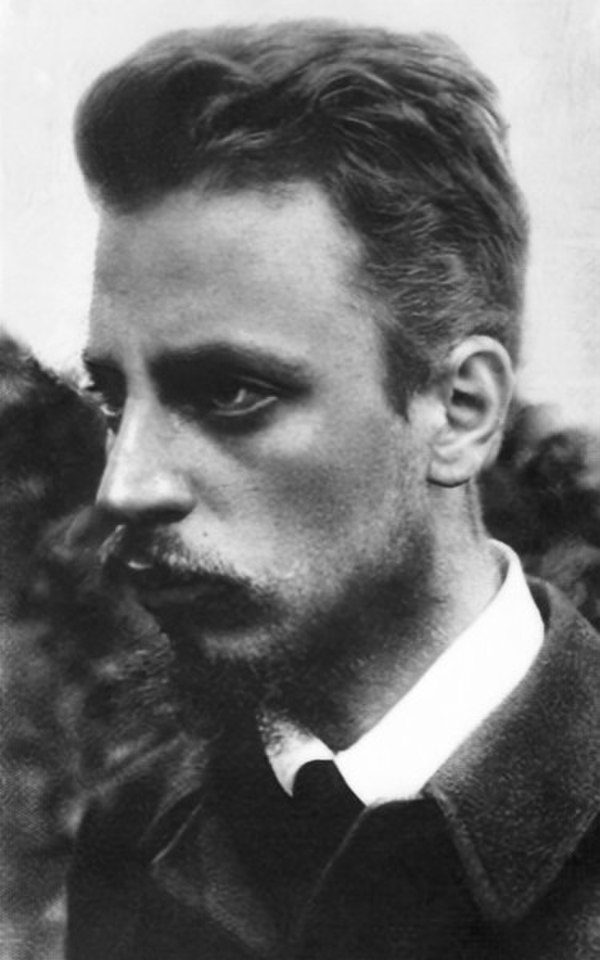
The Terrifying Beauty of Angels
Rainer Maria Rilke's assertion that "Every angel is terrifying" invites us to confront the paradox of beauty intertwined with fear. This statement challenges our conventional understanding of angels as purely benevolent beings, suggesting instead that their presence can evoke a profound sense of awe and dread. In a world where we often seek comfort and safety, Rilke's words remind us that true encounters with the sublime can be unsettling, pushing us beyond our familiar boundaries and into the depths of our own existence.
To engage with this quote is to embark on a journey through the complexities of the human experience, where beauty and terror coexist. Rilke's exploration of the angelic realm serves as a metaphor for the transformative power of the divine, which can inspire both reverence and fear. This duality compels us to reflect on our own lives, urging us to embrace the unknown and to recognize that the path to spiritual awakening is often fraught with challenges that can be both beautiful and terrifying.
The image / the metaphor
At its core, Rilke's quote conjures a vivid image of angels, beings traditionally associated with purity and protection, yet here depicted as sources of terror. The choice of the word "terrifying" evokes a visceral reaction, suggesting that the encounter with the divine is not merely a comforting experience but one that can shake us to our very foundations. This imagery invites us to consider the weight of the angel's presence, which can illuminate our darkest fears while simultaneously revealing the beauty of our deepest longings.
Diving deeper into the metaphor, we find that the angel represents not only a divine messenger but also the aspects of ourselves that we may find daunting. The terror associated with angels can be seen as a reflection of our own inner struggles and the fear of confronting our true selves. In this light, Rilke's statement becomes a call to embrace the complexity of our existence, acknowledging that the journey toward enlightenment is often riddled with discomfort and uncertainty.
In the speaker's tradition
Rainer Maria Rilke's work is deeply rooted in the mystical tradition, where the interplay of beauty and terror is a recurring theme. Concepts such as kenosis—the self-emptying of the divine—echo throughout his poetry, suggesting that true spiritual awakening requires a surrendering of the self. This aligns with the notion of dharma in Eastern philosophies, where the path to enlightenment often involves confronting the shadows within us, leading to a deeper understanding of our place in the universe.
In Rilke's "Duino Elegies," the exploration of existential themes resonates with the idea of sunyata, or emptiness, found in Buddhist thought. Just as Rilke's angels compel us to confront our fears, the realization of sunyata invites us to let go of our attachments and embrace the unknown. This connection between Rilke's work and broader mystical concepts highlights the universal nature of the human experience, where beauty and terror are inextricably linked on the path to spiritual growth.
Living the teaching
Consider a modern scenario where the teaching of Rilke's quote becomes palpable: a person standing at the edge of a significant life change, such as a career shift or the end of a relationship. The prospect of stepping into the unknown can be both exhilarating and terrifying, as it challenges the comfort of the familiar. In this moment, the individual may feel the presence of their own "angels," representing the potential for growth and transformation, yet also the fear of failure and loss that accompanies such a leap.
In the context of relationships, Rilke's insight can be particularly poignant. When we open ourselves to love, we often encounter the terror of vulnerability—the fear of rejection or the pain of loss. Yet, it is precisely through this vulnerability that we can experience the profound beauty of connection. By embracing the terrifying aspects of love, we allow ourselves to be transformed, recognizing that the depth of our relationships often lies in our willingness to face our fears head-on.
A reflection
As we contemplate Rilke's assertion that "Every angel is terrifying," we are invited to reflect on our own encounters with the sublime. What fears arise when we confront the beauty in our lives? In what ways can we embrace the terror that accompanies our spiritual journeys, recognizing it as a necessary part of our growth? Allow these questions to linger in your heart, guiding you toward a deeper understanding of the intricate dance between beauty and fear in your own life.



Join the BrightStar Community
Stay connected with daily inspiration, event announcements, and community wisdom