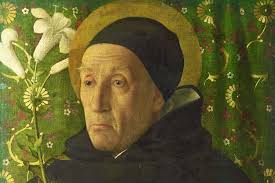
Words of the Divine: The Sacred Language of Creation
Meister Eckhart's assertion that "Every creature is a word of God" invites us to contemplate the profound interconnectedness of existence. In this statement, he suggests that all of creation serves as a manifestation of the divine, each being a unique expression of God's essence. This perspective not only elevates the significance of the natural world but also challenges us to recognize the sacred in the mundane. Understanding this relationship can transform our perception of life, urging us to see beyond surface appearances and into the deeper spiritual truths that bind us all.
As we delve deeper into Eckhart's words, we find a call to reverence for the entirety of creation. Each creature, from the smallest insect to the grandest mountain, embodies a divine message, a unique vibration of the cosmos. This notion compels us to engage with the world around us in a more mindful and compassionate manner. By acknowledging that every being is a reflection of the divine, we are invited to cultivate a sense of wonder and gratitude, fostering a deeper connection with both ourselves and the universe.
The image / the metaphor
At first glance, the imagery in Eckhart's quote evokes a sense of poetry, where each creature is likened to a word, a symbol of divine expression. The verb "is" suggests an intrinsic identity, implying that the essence of God is not separate from creation but rather interwoven within it. This metaphor invites us to consider how language itself can be a bridge to understanding the divine, as words carry meaning and intention, much like the beings they represent. The felt sense of this imagery is one of unity, where the boundaries between the creator and the created dissolve into a harmonious whole.
Diving deeper into this metaphor, we can explore the implications of viewing creatures as words. Just as words convey thoughts and emotions, each creature articulates a facet of the divine narrative. This perspective encourages us to listen to the "words" of nature, to observe the lessons and insights that arise from our interactions with the world. In this way, Eckhart's teaching becomes an invitation to engage in a dialogue with creation, where we learn to interpret the sacred messages embedded in the fabric of existence.
In the speaker's tradition
Meister Eckhart's thought is deeply rooted in the Christian mystical tradition, which emphasizes direct experience of the divine and the unity of all creation. Concepts such as kenosis—the self-emptying of God—resonate with Eckhart's assertion, suggesting that the divine essence is not confined to a singular entity but rather flows through all beings. This aligns with the idea of sunyata in Buddhism, where emptiness is seen as a space for potential and interconnectedness. Both traditions invite us to transcend dualistic thinking and embrace the wholeness of existence.
In Eckhart's own writings, we find echoes of this sentiment in his sermons, where he often speaks of the "birth of the Word" within the soul. This concept parallels the Christian understanding of the Logos, the divine Word through which all things were made, as articulated in the Gospel of John. By recognizing that every creature is a manifestation of this divine Word, we are called to honor the sacredness of life and to see the divine presence in all aspects of creation.
Living the teaching
Consider a modern scenario where this teaching might resonate: a walk through a local park. As you observe the trees swaying in the breeze, the laughter of children playing, and the intricate patterns of a spider's web, you begin to see these elements not merely as part of the landscape but as expressions of the divine. Each moment becomes an opportunity to engage with the sacred, to appreciate the beauty and complexity of life. This awareness can transform a simple outing into a profound spiritual experience, reminding us that every creature is indeed a word of God.
In a different context, imagine a challenging moment in a relationship, perhaps a disagreement with a loved one. By applying Eckhart's teaching, you might pause to recognize the divine essence within the other person, seeing them as a unique expression of God's creativity. This shift in perspective can foster empathy and compassion, allowing for deeper understanding and connection. In this way, the practice of seeing every creature as a word of God can guide us through the complexities of human interaction, encouraging us to approach each encounter with reverence and love.
A reflection
As we reflect on Eckhart's profound statement, we are left with a contemplative question: How might our lives change if we truly believed that every creature we encounter is a word of God? This inquiry invites us to explore our relationships with the natural world and with one another, challenging us to cultivate a deeper sense of connection and reverence. In embracing this perspective, we open ourselves to the possibility of transformation, both within ourselves and in the world around us.



Join the BrightStar Community
Stay connected with daily inspiration, event announcements, and community wisdom