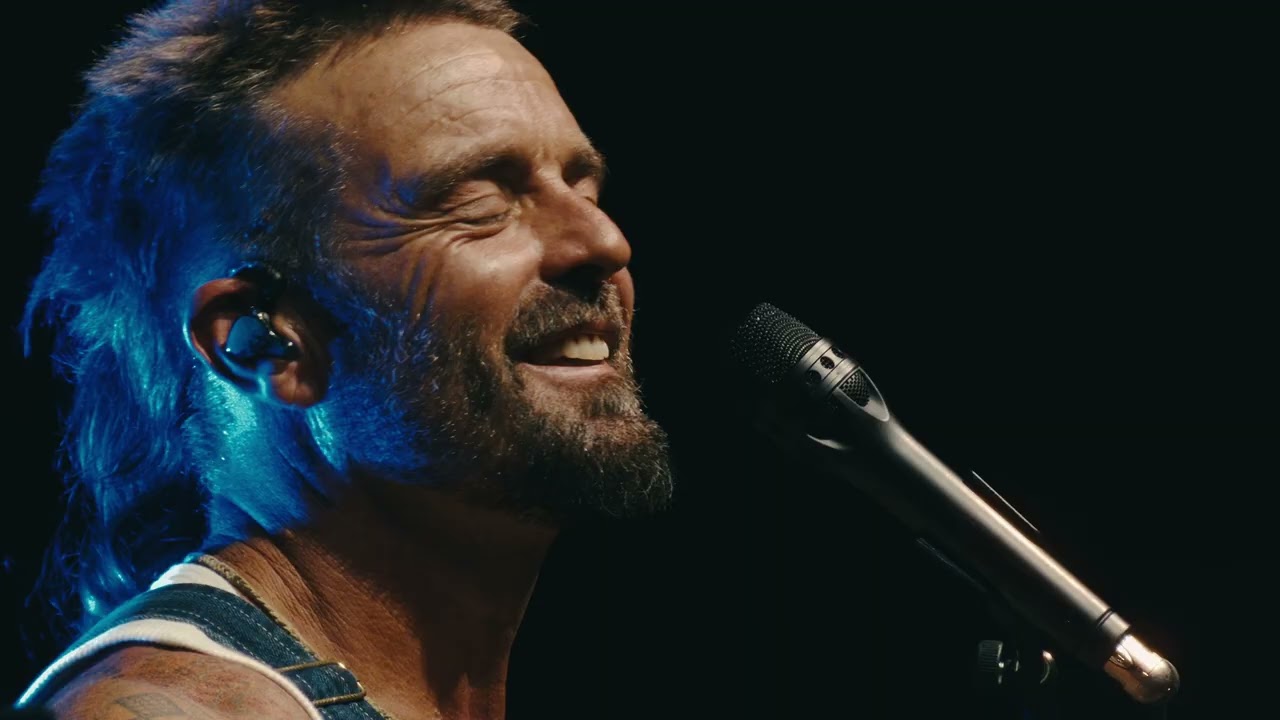
Where Did "Spirit Bird" Come From?
According to Rudd's own account, "Spirit Bird" first came through him on sacred land in the Kimberley region of North Western Australia. He emphasizes that while he is the vehicle for this song, it originates from a source "far beyond the physical realm that we have become accustomed to as a species today." This framing suggests a shamanic or visionary process rather than a conventional songwriting practice. The Kimberley itself is one of Australia's most ancient inhabited regions, home to Aboriginal cultures with kinship systems and knowledge transmission spanning thousands of years.
Rudd describes the song as carrying "thousands of years of intricate kinship systems and blood, sweat, and tears"—language that points to deep ancestral inheritance. He approaches the song with "full respect and focus for whatever it is I am holding," treating it as a sacred object that has been given to him to steward, not to own. This relationship to the material reflects an Indigenous epistemology in which knowledge, songs, and spiritual practices are inherited responsibilities rather than individual intellectual property.
What Is the Historical Trauma the Song Addresses?
The performance contains explicit acknowledgment of colonial violence and ongoing dispossession. In the "Soldier On" section (313s), Rudd directly addresses the long history of harm: "I know it's been thousands of years and I feel your hurt and I know it's wrong and you feel you've been chained and broken and burned."
He describes "those beautiful old people, those wise old souls have been ground down for far too long by that spineless man, that greedy man, that heartless man, deceiving man, that government hand taking blood and land, taking blood and land." This language is unambiguous about the systematic nature of colonial appropriation—framed not as isolated crimes but as ongoing structural violence embedded in government power.
The repeated refrain "we've seen this all before" (79s, 95s, and later returns) establishes this as cyclical rather than aberrant—a pattern that Indigenous communities recognize because it has been repeated across centuries. The song refuses to treat dispossession as historical; instead, it positions it as an ongoing condition that "still has the power to touch us to this day."
What Role Does the "Spirit Bird" Metaphor Play?
The spirit bird itself becomes a witness figure. In the performance, the bird "creaks and groans" and "knows she is seen this all before" (198s–227s). The gendering of the spirit bird as female, combined with her role as eternal witness, connects her to Indigenous concepts of the land itself as alive, aware, and bearing testimony to human events.
By using a non-human witness—a bird, traditionally associated with transcendence and connection between worlds in many Indigenous traditions—Rudd positions the song outside human time and politics. The spirit bird has "seen" millennia of human behavior and continues to carry that knowledge. Her witnessing is not judgment but recognition: she sees, she knows, and she endures.
What Does "Many Tribes of a Modern Kind" Mean?
A central theme emerges in the repeated lines "Many tribes of a modern kind doing brand new work same spirit by side joining hearts and hands and ancestral twine" (101s–128s). This phrase bridges traditional Indigenous identity with contemporary forms of collective action and solidarity.
"Tribes of a modern kind" suggests that kinship and collective organizing are not exclusively Indigenous practices transplanted into the present, but active regenerations of ancestral ways adapted to current conditions. "Doing brand new work same spirit" indicates that the spirit of resistance, collaboration, and land protection can take new forms—contemporary activism, corporate accountability campaigns, government pressure—while remaining rooted in ancestral principles.
The invocation of "ancestral twine" (the repetition emphasizes this) suggests a continuous thread connecting past and present action. Those organizing today are not separate from ancestral warriors and elders; they are part of the same lineage, even if their methods and context differ.
How Does the Song Frame Warrior Spirit and Collective Resistance?
The "Soldier On" verse (309s–384s) is not a call to military combat but to sustained resistance and spiritual fortitude. Rudd addresses the listener as "my good countryman"—creating intimacy and recognition—and emphasizes the warrior spirit that persists "in the earth, in the trees, in the rocks, in the water, in your blood, and in the air we breathe" (365s–371s).
By locating warrior spirit in the land itself as well as in human bodies and blood, the song suggests that resistance is not an individual moral choice but an inheritance embedded in the very environment. Fighting for land is not separate from fighting for oneself; the land is continuous with the self in Indigenous relational ontology.
The second major resistance section (488s–532s) shifts to direct action language: "Stand strong, keep the fire burning. Stick together, got to keep the wheels turning. Forcing companies to stand aside, forcing government to recognize the power of this tribe." Here, collective organization has concrete targets—corporations and government structures. The repetition of this verse three times emphasizes that this is not a one-time uprising but sustained, repeated pressure. The image of "keeping the wheels turning" suggests that this work is continuous labor, not a moment.
What Is the Cyclical Structure of the Song?
The opening and closing sections bookend the performance with identical lyrics: "Give it time and we wonder why. Do what we can. Laugh and we cry. Sleep in your dust because we've seen this all before" (69s–79s, 597s–607s). This cyclical structure mirrors the theme of repetition that runs through the entire piece—the cycles of harm, survival, and resistance that characterize colonial histories.
"Sleep in your dust" is a striking phrase—it suggests both burial in dispossession and rest, perhaps even acceptance of the human condition of impermanence. The juxtaposition with "we've seen this all before" suggests a kind of weary wisdom: humans repeat patterns, but those patterns are known, witnessed, and survived by those who came before.
The repeated "slowly it fades" refrain (135s–269s) creates a musical and emotional space for processing loss without rushing toward resolution. In the live setting at Forest National, this repetition likely created a meditative or trance-like state, allowing the 8,000-person audience to sit with the weight of the material rather than move past it quickly.
How Does Performance Context Shape the Song's Meaning?
The fact that this song—originating on sacred Australian land—is performed in Belgium to a sold-out crowd of 8,000 speaks to its capacity to move people across geographical and cultural contexts. Rudd himself notes in the video description that he has "watched it touch people deeply around the world."
Yet the performance also maintains a specificity of place and lineage. The song is not universalized; it remains rooted in Australian Indigenous dispossession and the thousands of years of kinship systems particular to that continent. The audience in Belgium is not positioned as the primary audience but as witnesses to something transmitted from elsewhere. This avoids a common pitfall of spiritual or protest music: the flattening of Indigenous specificity into a generic "human struggle."
The live recording itself becomes a form of documentation and transmission. The credited production team (Josh Hickie as director/camera/editor, multiple camera operators, live video director Jeroen Beckers) ensures that the performance reaches beyond those present in Brussels. In this way, the song continues its journey—touching new listeners, potentially reaching Indigenous communities in other lands, and extending the web of "ancestral twine" that connects modern tribes across geography.
Where to go from here
To deepen engagement with "Spirit Bird," listen to the full recording and sit with the repetitive sections—particularly "slowly it fades" and the "Soldier On" verses. Research the Kimberley region's Indigenous history and the ongoing land rights struggles in Australia to understand the specific ground from which this song emerged. Explore Xavier Rudd's broader discography, which consistently engages themes of land, spirituality, and collective resistance. Consider how the song's framework—ancestral lineage, cyclical history, embedded warrior spirit—might apply to your own communities' histories and contemporary struggles. Finally, notice what "tribal" organizing looks like in your own context, and how ancestral wisdom might inform modern resistance.
]]>