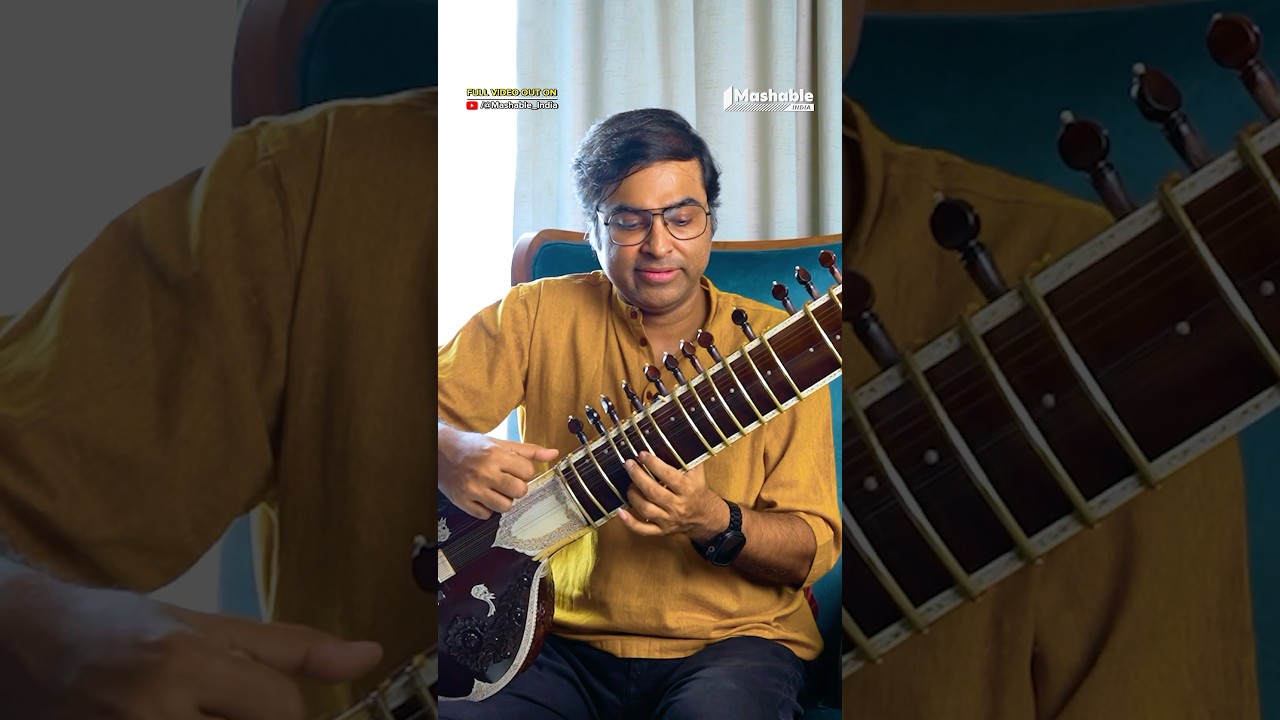
TLDR: This one-minute performance showcases a contemporary fusion recreation of Garaj Garaj, featuring vocalist Kiran, vocalist Nivi, and sitarist Purbayan Chatterjee in an ensemble arrangement that demonstrates how Indian classical musicians blend vocal melody, string articulation, and rhythmic accompaniment in real time. The piece captures laughter, spontaneity, and the playful exchange between three skilled practitioners working within the classical tradition while exploring modern collaborative arrangements.
What Is Garaj Garaj in Indian Classical Music?
Garaj Garaj is a traditional composition rooted in Indian classical music, one that carries lyrical depth and melodic precision. The phrase "garaj" itself suggests movement, sound, or the act of rolling—fitting for a piece that invites performers to engage with rhythm and phrasing. In this recreation by Kiran, Nivi, and Purbayan Chatterjee, the composition is treated not as a museum piece but as a living framework for musical dialogue. The performers approach it as an opportunity to layer vocal expression, sitar articulation, and tabla patterns in ways that honor the original while creating something contemporary in its sensibility.
How Do Vocal, Sitar, and Tabla Work Together?
This performance demonstrates the three-pillar structure of Indian classical ensemble music. The vocalists (Kiran and Nivi) establish the melodic and lyrical anchor, carrying the raga scale and the emotional content of the piece. Purbayan Chatterjee on sitar responds and mirrors the vocal line while adding his own ornamental flourishes—the sitar's ability to bend notes and create micro-tonal variation allows it to shadow and embellish the human voice. The tabla, though not explicitly featured in the brief excerpt, provides the temporal grid that holds all three elements in synchronization. This triadic relationship—melody, accompaniment, and rhythm—is the classical formula, but what the performers are doing here is making it conversational rather than hierarchical. Each musician listens and responds in real time, creating an exchange rather than a predetermined arrangement.
What Is the Role of Spontaneity and Laughter in Classical Performance?
One of the striking elements of this cover is the presence of laughter and playful interaction. At multiple points in the video (noted at 10 seconds and 27 seconds in the timestamped segments), the performers break into laughter. This is not a flaw or a lack of seriousness—it is a hallmark of classical Indian music at its best. In the gurukul (apprenticeship) tradition and in live performance, spontaneity and joy are seen as signs of authentic musical engagement. When a musician is present and responsive, rather than mechanically executing notation, the moment becomes alive. The laughter suggests the performers are surprising each other, finding unexpected harmonies or rhythmic solutions, and enjoying the creative risk of performing without a script. This openness is what separates a recorded studio take from a live collaboration.
How Does Purbayan Chatterjee's Approach to the Sitar Shape This Piece?
Purbayan Chatterjee is known for his willingness to work across genres while maintaining rigorous classical technique. On the sitar, he is responsible for both structural anchor and coloristic detail. In a fusion context like this cover, the sitar must do double duty: it provides the harmonic and melodic foundation that the vocalists can depend on, while also having the freedom to ornament and elaborate around the core melody. The sitar's fretless fingerboard and sympathetic strings give it a vocal-like quality—it can imitate the tone and phrasing of the human voice, which is why it is such an effective ensemble partner for vocalists. Purbayan's technique allows him to follow the micro-timing of the singers, staying with them even when the rhythm is flexible, and then returning to strict time when required.
What Does This Cover Reveal About Contemporary Indian Classical Practice?
This Garaj Garaj recreation is a window into how Indian classical music exists today. Rather than being locked into concert hall conventions or strictly adhering to a single regional school (gharana), musicians are experimenting with ensemble configurations and blending vocal and instrumental approaches. The three-person lineup—two vocalists and one sitarist—is not a traditional grouping but a thoughtful one. It allows the voices to carry the narrative weight while the sitar acts as a bridge instrument that can respond to and amplify the vocal texture. This kind of creative recombination is becoming more common as musicians train across multiple instruments and vocal traditions, and as performance contexts expand beyond the formal recital format.
Where to Go from Here
To deepen your engagement with this style of music, listen to more of Purbayan Chatterjee's fusion and ensemble work. Explore recordings of traditional vocal-sitar duets to understand the classical precedent for this pairing. Pay attention to how vocalists like Kiran and Nivi shape their phrases and how a responsive instrumentalist like Purbayan stays interlocked with that shape. If you are interested in learning this approach, seek out teachers who emphasize ensemble playing and spontaneous musical dialogue—these skills are less about reading notation and more about developing acute listening and the ability to respond musically in real time. The laughter and joy in this performance point to a deeper truth: classical music is not about perfection, but about presence and connection.